


When Helping Means Asking, Not Answering
One of the hardest shifts a leader can make is realizing that being helpful does not always mean giving someone an answer.
For many leaders, advice is the most natural response when someone brings them a problem. You have experience. You can often see the path forward. And when things are moving quickly, telling someone what to do can feel like the fastest and most useful option.
It can also feel like what leadership is supposed to look like.
Leaders are often rewarded for being decisive, knowledgeable, and responsive. Over time, that can create an unspoken expectation that they should always know what to do next. So when someone asks for help, the leader steps in, gives direction, and keeps the work moving.
In the moment, that may work.
But when having the answer becomes the default, it creates a pattern that neither person intended. The team member learns to bring problems to the leader before fully thinking them through. The leader becomes responsible for more and more decisions. Eventually, one person is doing most of the thinking while everyone else waits for direction.
The leader becomes the answer person.
And eventually, the bottleneck.
There are, of course, times when a leader should give a clear answer. Some situations require direct guidance. There may be risk involved, context the other person does not have, or a decision that simply belongs to the leader.
But many workplace conversations are not really asking for an immediate solution. They are asking for space to think.
A team member may need help sorting through competing priorities, naming what is getting in the way, or building confidence in a decision they are already capable of making. When a leader answers too quickly, they may solve the immediate problem while unintentionally taking away the other person’s opportunity to grow.
Coaching changes the conversation.
A coaching leader does not withhold support. They do not leave people to struggle alone. They simply resist the urge to take over the thinking too quickly.
Instead of starting with an answer, they start with curiosity.
They might ask, “What have you considered?” or “What feels most important here?” They might ask, “What is getting in the way?” or “What do you need to move forward?”
The questions are simple, but they change the relationship.
They communicate, “I trust you to think.”
They create room for the other person to make sense of the situation, consider their options, and decide what they believe the next step should be. The leader is no longer positioned as the only source of insight. The conversation becomes a place where insight can emerge.
That matters because when people help develop the solution, they are more likely to understand it, believe in it, and follow through on it. That is the difference between compliance and ownership.
Someone may follow a leader’s answer because the leader has authority. But when they have had the space to think through the problem themselves, they are more likely to take responsibility for the decision and the outcome. They also begin building the skills they will need the next time something similar happens.
They learn how to assess a situation. They become more comfortable making decisions. They build confidence in their own judgment. They stop treating every uncertainty as something that needs to be escalated.
This does not happen because the leader disappears. It happens because the leader offers a different kind of support.
Instead of saying, “I will solve this for you,” the leader communicates, “I will help you think this through.”
One creates dependence. The other builds capability.
This shift also changes the experience of leadership.
Leaders who feel responsible for solving every problem often become overloaded, even when they are surrounded by capable people. Their days fill up with questions, approvals, decisions, and problems that do not always need to remain theirs.
The pressure adds up.
It can also pull leaders away from the work that only they can do, like setting direction, creating alignment, anticipating what is ahead, and developing the people around them.
A coaching approach helps redistribute the thinking. It allows leaders to remain available without becoming responsible for everything. They can still provide context, challenge assumptions, share expertise, and make the final decision when the decision is theirs to make.
But they do not have to carry every problem from beginning to end.
That is not stepping away from leadership. It’s becoming more intentional about how you lead.
Asking a question instead of giving an answer may sound simple, but in practice, it can be uncomfortable.
You may already know what you would do. You may feel impatient. You may worry that the conversation is taking too long. You may feel pressure to prove your value or demonstrate your expertise.
Sometimes giving the answer is not really about what the other person needs.
It is about relieving our own discomfort.
Staying curious requires self-awareness. It means noticing the urge to jump in without automatically acting on it. It means listening without mentally preparing the solution. It means allowing a pause to remain a pause.
It also means accepting that someone else may arrive at an answer that is different from yours and still effective.
That is part of the inner work of becoming a coaching leader.
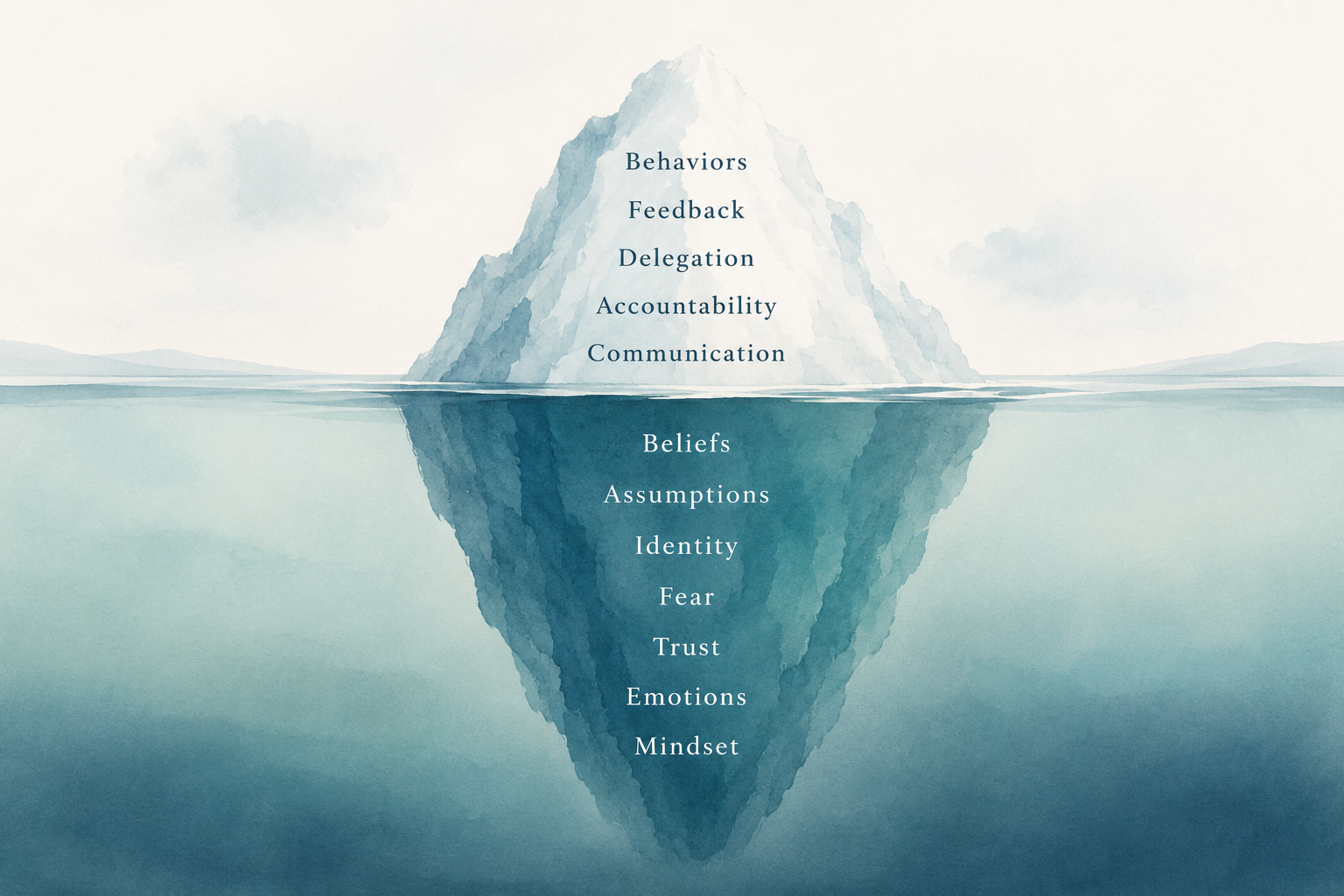
The shift is not just about learning a list of better questions. It is about becoming more comfortable with not being at the center of every solution.
And coaching is not about making people figure everything out alone. A leader may still need to clarify expectations, share information, identify risks, offer perspective, or make the final decision.
The difference is that direction becomes intentional rather than automatic.
Before stepping in, the leader creates space to understand what the other person already knows, what they have considered, and where they are actually stuck.
Sometimes the person needs advice. Sometimes they need a decision. Sometimes they need encouragement. And sometimes they simply need someone to ask a question that helps them hear their own thinking more clearly.
You cannot know what kind of support is needed if you begin the conversation by immediately giving the answer.
Curiosity makes better support possible.
Coaching offers a different way to lead. It develops people while reducing unnecessary dependence on the leader. It builds stronger thinkers, more confident decision-makers, and teams that can move work forward without waiting for someone above them to provide every answer.
It also gives leaders permission to stop measuring their value by how many problems they personally solve.
The most valuable contribution a leader makes may not be the answer they provide.
It may be the question that helps someone else discover they are capable of finding one.